How Do Culture, Ethnicity, and Socioeconomic Status of Families Influence Childrenã¢â‚¬â„¢s?
From educational toys to governmental guidelines and detailed nursery progress reports, there are lots of resources available to help parents track and facilitate their children'due south development. But while there are tricks we can use to teach children to talk, count, draw or respect others, a surprisingly big part of how they develop is determined by the culture they abound up in.
Child development is a dynamic, interactive procedure. Every kid is unique in interacting with the earth effectually them, and what they invoke and receive from others and the environs too shapes how they think and behave. Children growing upwards in dissimilar cultures receive specific inputs from their environment. For that reason, there'southward a vast assortment of cultural differences in children's beliefs and behaviour.
Linguistic communication is 1 of the many ways through which culture affects development. We know from research on adults that languages forge how people call up and reason. Moreover, the content and focus of what people talk nearly in their conversations also vary beyond cultures. Every bit early on as infancy, mothers from different cultures talk to their babies differently. German mothers tend to focus on their infants' needs, wishes or them as a person. Mothers of the African tribal group Nso, on the other hand, focus more on social context. This tin can include the child's interactions with other people and the rules surrounding it.
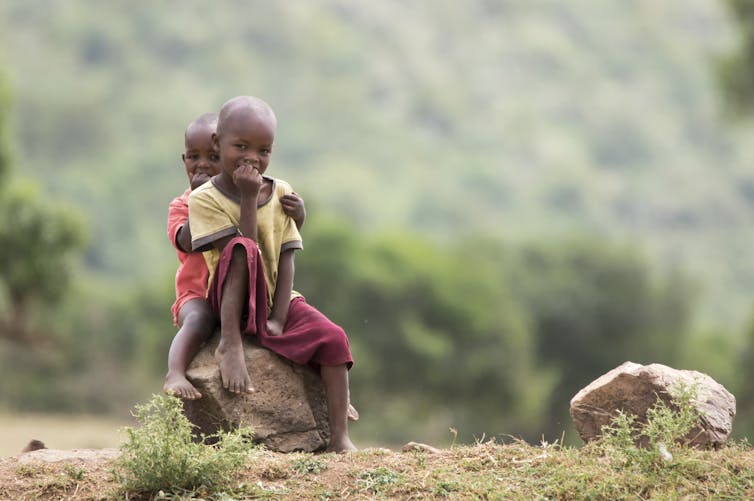
This early exposure affects the manner children attend to themselves or to their relationship with others – forming their self epitome and identity. For example, in Western European and North American countries, children tend to draw themselves around their unique characteristics – such as "I am smart" or "I am good at cartoon". In Asian, African, Southern European and South American countries, withal, children depict themselves more often effectually their relationship with others and social roles. Examples of this include "I am my parents' child" or "I am a good student".
Because children in dissimilar cultures differ in how they think about themselves and relate to others, they also memorise events differently. For example, when preschoolers were asked to describe a recent special personal experience, European-American children provided more than detailed descriptions, recalled more specific events and stressed their preferences, feelings and opinions near it more than Chinese and Korean children. The Asian children instead focused more on the people they had met and how they related to themselves.
Cultural effects of parenting
Parents in unlike cultures also play an of import function in moulding children's behaviour and thinking patterns. Typically, parents are the ones who prepare the children to interact with wider guild. Children's interaction with their parents frequently acts equally the archetype of how to conduct effectually others – learning a multifariousness of socio-cultural rules, expectations and taboos. For case, young children typically develop a conversational style resembling their parents' – and that often depends on culture.
European-American children frequently provide long, elaborative, cocky-focused narratives emphasising personal preferences and autonomy. Their interaction way also tends to be reciprocal, taking turns in talking. In dissimilarity, Korean and Chinese children'southward accounts are usually brief, relation-oriented, and show a swell concern with authority. They often take a more passive role in the conversations. The same cultural variations in interaction are too evident when children talk with an contained interviewer.
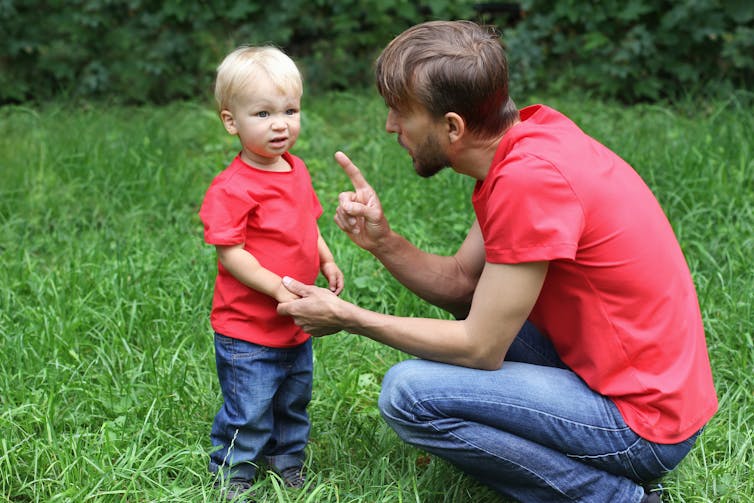
Cultural differences in interactions betwixt adults and children also influence how a child behaves socially. For instance, in Chinese culture, where parents presume much responsibility and authorisation over children, parents interact with children in a more authoritative manner and demand obedience from their children. Children growing up in such environments are more than likely to comply with their parents' requests, even when they are reluctant to do so.
By contrast, Chinese immigrant children growing up in England comport more than similarly to English children, who are less likely to follow parental demands if unwilling.
From grade to court
As the world is getting increasingly globalised, knowledge regarding cultural differences in children's thinking, retentiveness and how they interact with adults has important practical implications in many areas where you have to understand a child's psychology. For instance, teachers may need to appraise children who come from a multifariousness of cultural backgrounds. Knowing how children coming from a different culture think and talk differently can help the instructor amend interview them equally part of an oral bookish test, for example.
Another important area is forensic investigations. Beingness aware that Chinese children tend to recall details regarding other people and be brief in their initial response to questions may enable the investigator to allow more fourth dimension for narrative do to prepare the child to answer open up-concluded questions and prompt them with follow upwards questions.
Also, knowing that Chinese children may be more sensitive and compliant to authorisation figures – and more obedient to a perpetrator within the family – an interviewer may need to spend more than fourth dimension in edifice rapport to help the child relax and reduce their perceived say-so. They should too be prepared to be patient with reluctance in disclosing abuse inside families.
While children are unique and develop at their own pace, the cultural influence on their development is conspicuously considerable. It may even impact how apace children reach different developmental milestones, simply research on this complicated subject is still inconclusive. Importantly, knowledge about cultural differences tin too aid us pin down what all children have in common: an clamorous curiosity nearly the earth and a love for the people effectually them.
Source: https://theconversation.com/how-culture-influences-childrens-development-99791
0 Response to "How Do Culture, Ethnicity, and Socioeconomic Status of Families Influence Childrenã¢â‚¬â„¢s?"
Post a Comment